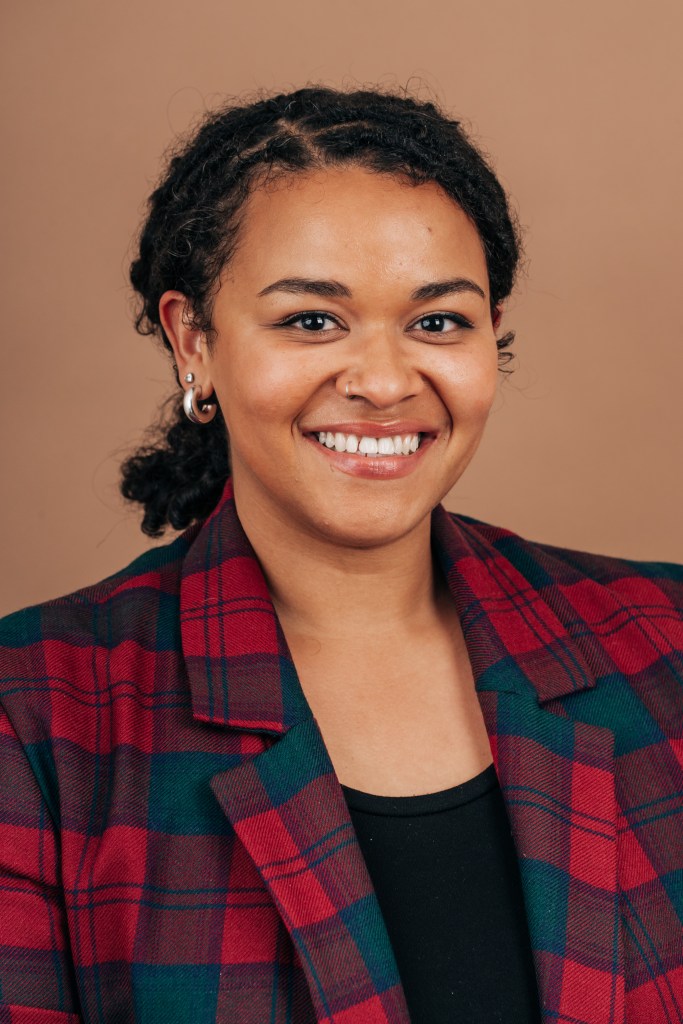
I am an award-winning historian and writer specialising in African American and Black British history, with particular interests in Black internationalism, transnational activism, surveillance, and the global circulation of Black radical thought.
I hold a PhD from the University of Hertfordshire, alongside an MA (Hons) and a Master’s degree in History from the University of Dundee.
I am currently a Postdoctoral Research Associate at the David Bruce Centre for the Study of the Americas, where I am undertaking my project, ‘A Tricky Business: Black Internationalism and the Architecture of Anglo-American Surveillance, 1933–1976.’ This project examines how Black internationalism shaped intelligence cooperation, government policy, and diplomatic relations between Britain and the United States, reconstructing the networks through which security knowledge was produced and shared across the Atlantic world.
My previous research explored the ideological connections between early twentieth-century Black radical women and the Black Power Movement, focusing on the transnational exchange of ideas, strategies, and activist networks across generations.
My work has been recognised through several prestigious awards, including Bloomsbury’s inaugural Academic Writing Fellowship, the 2024 Olivette Otele Award from the Institute of Historical Research, and the inaugural Dan Leab Author Award at the American Communist History Journal.
Over the last five years, I have worn many hats outside of academia in service of bettering conditions for young Black people in Britain. I was most recently a Mentor Coordinator at The Catalyst Collective, and for three years prior to that I was a Project Coordinator at The Young Historians Project (as well as a part of its sibling organisation in the History Matters editorial team). I have also worked hard to translate academic work for public consumption – through edited collections, and written public-facing history.
In February 2027, my first monograph, ‘Long Distance Runners: Black Women Radicals and the Struggle for Liberation’, will be published by Bloomsbury Academic.
WRITING & RESEARCH
Bloomsbury Academic, 2027
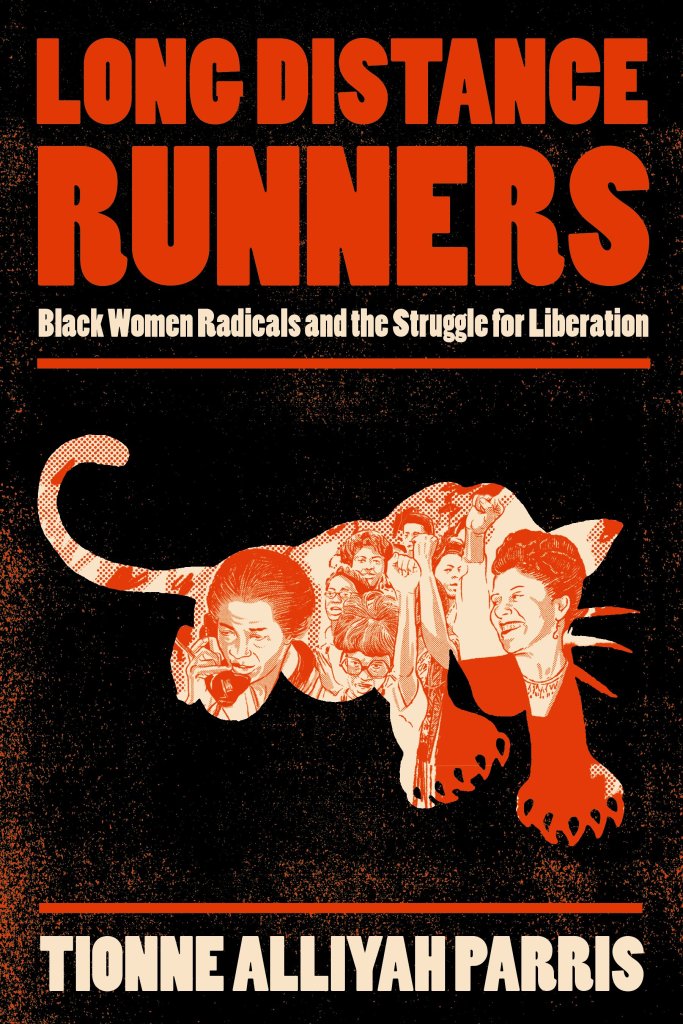
Long Distance Runners tells the extraordinary story of a network of pioneering Black radical women – Claudia Jones, Shirley Graham Du Bois, Vicki Garvin, Louise Thompson Patterson and Eslanda Robeson – whose fearless activism reshaped the 20th-century fight for Black liberation.
This book explores their enduring influence, revealing how their transnational networks and strategies laid the groundwork for subsequent movements. They were exiled not only from the frontlines of U.S. activism but from our memory of Black radical activism. By bringing their overlooked contributions back into focus, this book redefines our understanding of the Civil Rights and Black Power eras, showcasing these women as unseen architects in the global struggle for liberation. The strategies these women developed – anti-war activism, transnational approaches, grassroots organizing, and working-class solidarity – are just as relevant today as global conflicts escalate and movements for justice face increasing repression
CONTENTS
Introduction: The Unseen Architects of 20th-Century Black Activism (1930-1936)
1. The Foundations of Black Women’s Radicalism (1930-1936)
2. Eslanda Robeson’s African Journey (1930-1936)
3. Anti-Fascism and The Struggle Against Jim Crow (1936-1946)
4. Black Women’s Activism on the American Home Front (1936-1946)
5. Journalism as Praxis in the Fight for Democracy (1946-1956)
6. A Network Under Attack: Marxism on Trial (1946-1956)
7. Claudia Jones, Shirley Graham Du Bois and Vicki Garvin: Pioneers in Exile (1956-1966)
8. Continuities in the Black Freedom Struggle: New Faces, Old Battles (1956-1966)
9. Black Power and Black Panthers: Retreading Radical Roots (1967-1977)
10. Black Women Radicals: Long Distance Runners in the Struggle for Black Liberation (1967-1977)
Conclusion: The Future of Black Radicalism: Lessons Learned and the Road Ahead
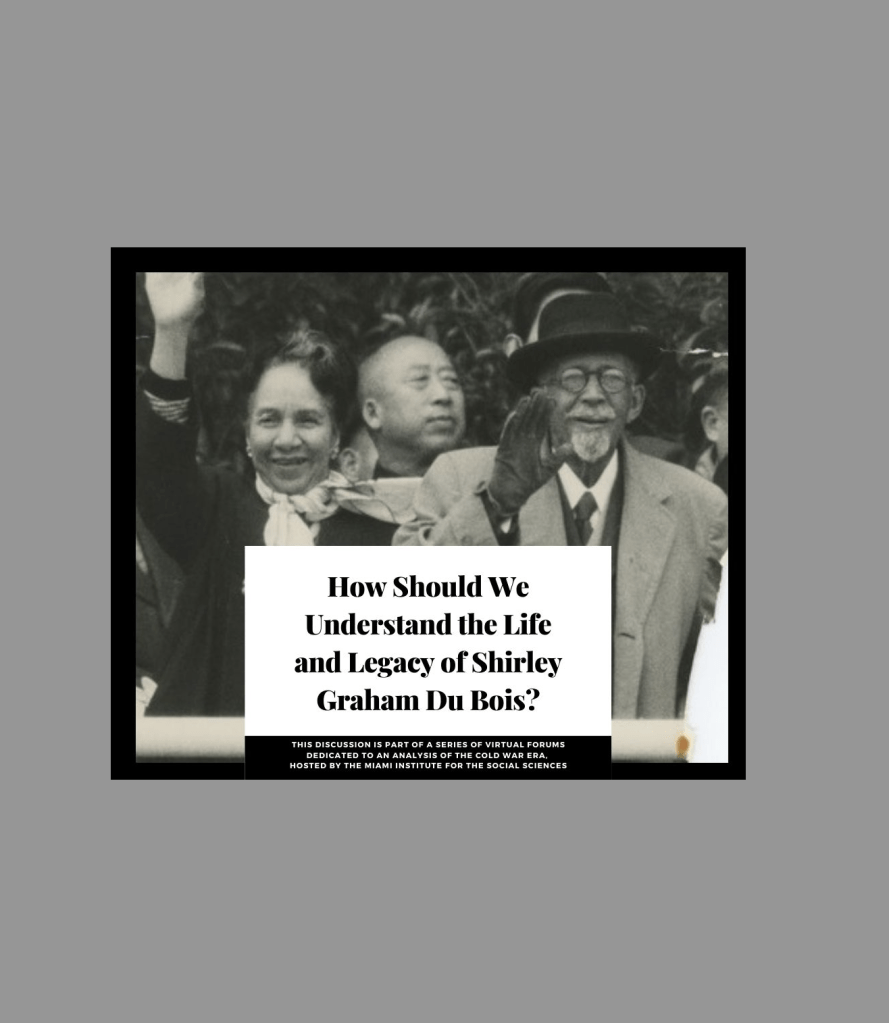
Written by Tionne Alliyah Parris, this essay launches the forum on Shirley Graham Du Bois. This forum on Graham Du Bois, curated by Parris and Phillip Luke Sinitiere, is part of the Miami Institute’s series of forums on “Learning from Their Lived Experiences during the Cold War.” In the essay, Parris explains that Shirley Graham Du Bois’s “impact through the Civil Rights and Black Power eras has been somewhat overlooked, and this is symptomatic of a broader failure to recognise the interpersonal, behind-the-scenes work that was undertaken by a whole network of militant Black women activists throughout the twentieth century… Shirley Graham Du Bois was one of many who laboured in a collective and worked tirelessly to liberate Black people, and ‘all oppressed people’, across the world.”
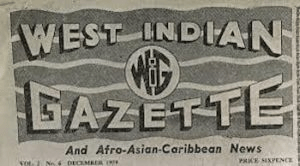
When Claudia Jones was deported to Britain in 1955, the U.S. Government likely expected that the Communist threat she presented was finally neutralized. Yet, from the shores of Britain, Jones continued her radical activism. The West Indian Gazette and Afro-Asian Caribbean News (WIG), created by Jones in 1958, became an effective bullhorn to foster unity and solidarity amongst Black migrants in Britain toward many causes – at home and abroad. She called upon her previously established transnational connections to bring news of international developments to her British audience.
The WIG’s coverage of the U.S. Civil Rights and Black Power Movements throughout the 1960s was also significant. Linking the United States and the UK to global changes, Jones kept a finger on the pulse of radical movements across the world and amplified them to her audience in editorials about uprisings in the Congo in 1960, revivals of Garveyism in Jamaica, and revolution in Cuba, for example. Drawing closely from the WIG, this article analyses some of the continuities that rippled throughout the activism of Claudia Jones into the period of the Black Power Movement, as well as the overlapping activists, their strategies, and the important discussions the WIG was able to platform during its run.
This article highlights that the many crossovers observed through the pages of the WIG evidence how a generation of activists may have been influenced by the knowledge transmitted through the life and work of Claudia Jones.
Chapter co-written with Professor Gerald Horne
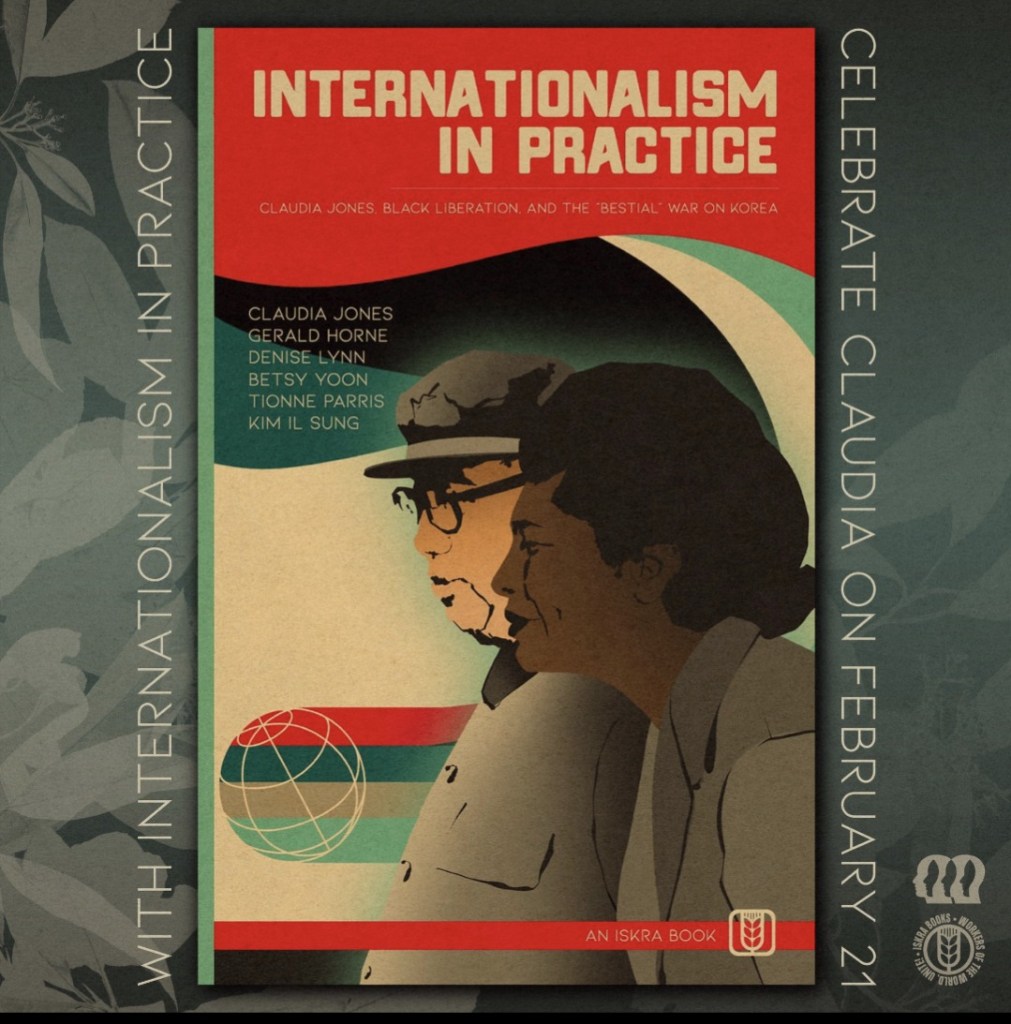
Internationalism in Practice: Claudia Jones, Black Liberation, and the “Bestial” War on Korea is a timely exploration of Claudia Jones’ tireless advocacy for international, anti-imperialist, and anti-war solidarity during the pivotal, tumultuous years of the early 1950s. This new scholarly collection from Iskra Books unveils Jones’ enduring legacy and continued relevance through her original writings, blending sharp theoretical critique, an approachable and accessible wit, and a poignant focus on the unique exploitations experienced by women of historically oppressed ethnicities in the United States.
“American mothers” of all ethnic and cultural groups, Jones wrote, must “emulate the peace struggles of their anti-fascist sisters worldwide to end the bestial Korean war.” This impassioned plea resonates across time, inviting modern readers to reflect on the enduring necessity for a united, multi-ethnic and multi-cultural, anti-imperialist front in a world where hostilities against the peoples of the Global South increase by the day.
With excellent new contributions from Gerald Horne, Denise Lynn, Tionne Parris, and Betsy Yoon, as well as a classic piece of lesser known writing from Kim Il Sung, Internationalism in Practice bridges past and present—a testament to Jones’ fearless dedication to justice, her unyielding stance against imperialist aggressions both abroad and at home, and her foundational advocacy for revolutionary intersectionality and peace.
Read more: https://www.iskrabooks.org/books/p/internationalism-in-practice
Edited by Tionne Alliyah Parris

I Dare Say: A Gerald Horne Reader is a timely and essential collection of the many works of Professor Gerald Horne—a historian who has made an indelible impact on the study of US and international history. Horne approaches his study of history as a deeply politically engaged scholar, with an insightful and necessarily partisan stance, critiquing the lasting reverberations of white supremacy and all its bedfellows—imperialism, colonialism, fascism and racism—which continue to wreak havoc in the United States and abroad to this day.
Drawing on a career that spans more than four decades, this sparkling reader showcases the many highlights of Horne’s writings, delving into discussions of the United States and its place on the global stage, the curation of mythology surrounding titans of 20th Century African American history like Malcolm X, and Horne’s thoughts on pressing international crises of the 21st Century including the war in Afghanistan during the early 2000s, and the war in Ukraine which erupted in February 2022.
As we continue to observe the chaos of our current times, I Dare Say: A Gerald Horne Reader foregrounds a firmly rooted, consistent analysis of what has come to pass—and provides illuminating insight that better informs where we may be headed, and outlines what needs to be done to stem the tide of growing fascism across the Western world.

This article illuminates that the connectivity of Black radical women’s activism, as those highlighted in this piece operated not only in the United States, but in Britain (and many other countries). This brief snapshot of their work shows that the role they played in organising against the status quo, which in their day was blatant racial segregation, as well as economic inequality, has often been overlooked in both US and UK historical writing. Their erasure has left us with an incomplete picture of Black liberatory activism, especially in Britain.
Importantly, women like Claudia Jones, Vicki Garvin and Louise Thompson Patterson began their activism through political and union organising and continued to prioritise the interlinked issues of class, race and gender throughout their lives. Their contributions to progressive movements are instructive and should be taken as a guide to action for those of us in the 21st century today..
 Tionne Alliyah Parris